Roger Ballen. The Works: Drawing meets Photography
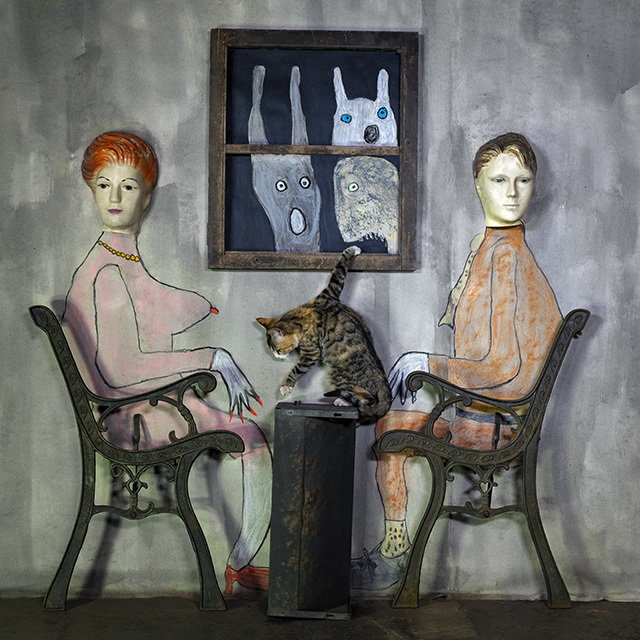
Museum Hanmi presents Roger Ballen: The Works — Drawing Meets Photography, a solo exhibition tracing more than six decades of the artist’s practice, from his earliest photographs of the 1960s to his recent explorations in colour. Bringing together photography, drawing and experimental approaches to image-making, the exhibition offers an extensive insight into the evolution of Ballen’s distinctive visual language and the increasingly complex relationship between photographic reality and artistic imagination.
Born in New York in 1950 and based in Johannesburg, South Africa, Roger Ballen began his career working within the traditions of documentary photography. Over time, his practice evolved into a highly individual form of image-making in which photography, drawing, installation and theatrical staging became inseparable. His photographs explore the boundaries between reality and fiction, the conscious and unconscious, and the familiar and the unsettling. Figures, animals, objects and fragmented drawings inhabit enclosed spaces that appear simultaneously ordinary and otherworldly, confronting viewers with aspects of human existence that often remain hidden or overlooked.
Central to Ballen’s work is the transformation of photography from a medium of observation into one of construction. His early photographs reveal a fascination with the visual relationships between lines, forms, light and movement. During the 1980s and 1990s, particularly in his Dorps, Platteland and Outland series, these formal concerns gradually developed into a more deliberate arrangement of subjects and environments. What initially emerged from the observation of everyday life increasingly became an elaborate visual language in which figures, objects and architectural elements were carefully orchestrated within the photographic frame.
This transformation became particularly evident in the Shadow Chamber and Boarding House series, where Ballen's photographs evolved into constructed psychological spaces. Drawings on walls, suspended objects, animals and human figures interact in compositions that resist conventional narratives. Rather than documenting an external reality, Ballen creates environments governed by their own visual and emotional logic. These carefully staged scenes invite viewers into a world where the boundaries between the real and the imagined become increasingly uncertain.
Drawing plays a fundamental role in this development. In Theatre of Apparitions, Ballen moves beyond incorporating drawings into photographs and instead makes the act of drawing itself the subject of photographic transformation. By scratching and removing material from darkened glass surfaces, he creates forms that emerge through light, exposure and framing. The resulting images resemble fleeting apparitions, suspended between abstraction and figuration. Photography no longer simply records what has been drawn; it becomes a means of giving these marks an entirely new visual existence.
Ballen’s distinctive aesthetic, often described as Ballenesque, is characterised by an unsettling combination of psychological intensity, formal precision and unexpected encounters. His imagery shares affinities with Art Brut, particularly in its engagement with instinctive expression and forms that exist beyond established artistic conventions. Animals, especially birds and rats, recur throughout his work, appearing not merely as symbolic elements but as active participants in enigmatic scenes. In series such as Asylum of the Birds and Roger’s Rats, they inhabit theatrical environments that blur distinctions between human and animal, order and disorder, reality and fantasy.
In his more recent photographs, Ballen introduces colour as an additional dimension of his visual language. Having worked predominantly in black and white for decades, he uses vivid colours to intensify the relationships between figures, objects and their surroundings. Rather than marking a departure from his earlier practice, this development extends his longstanding interest in composition, psychological tension and the expressive possibilities of photographic space.
Spanning six decades of experimentation, The Works — Drawing Meets Photography reveals an artistic practice that continually challenges the conventional boundaries of photography. From documentary observation to elaborate constructions of imagined worlds, Ballen has developed a body of work in which drawing and photography exist in constant dialogue. His images resist straightforward interpretation, opening spaces where the visible and invisible, the familiar and the uncanny, and the conscious and unconscious intersect.
